Real EstateJuly 21, 2026
Furnished vs Unfurnished Property in Dubai: Which Is Better?
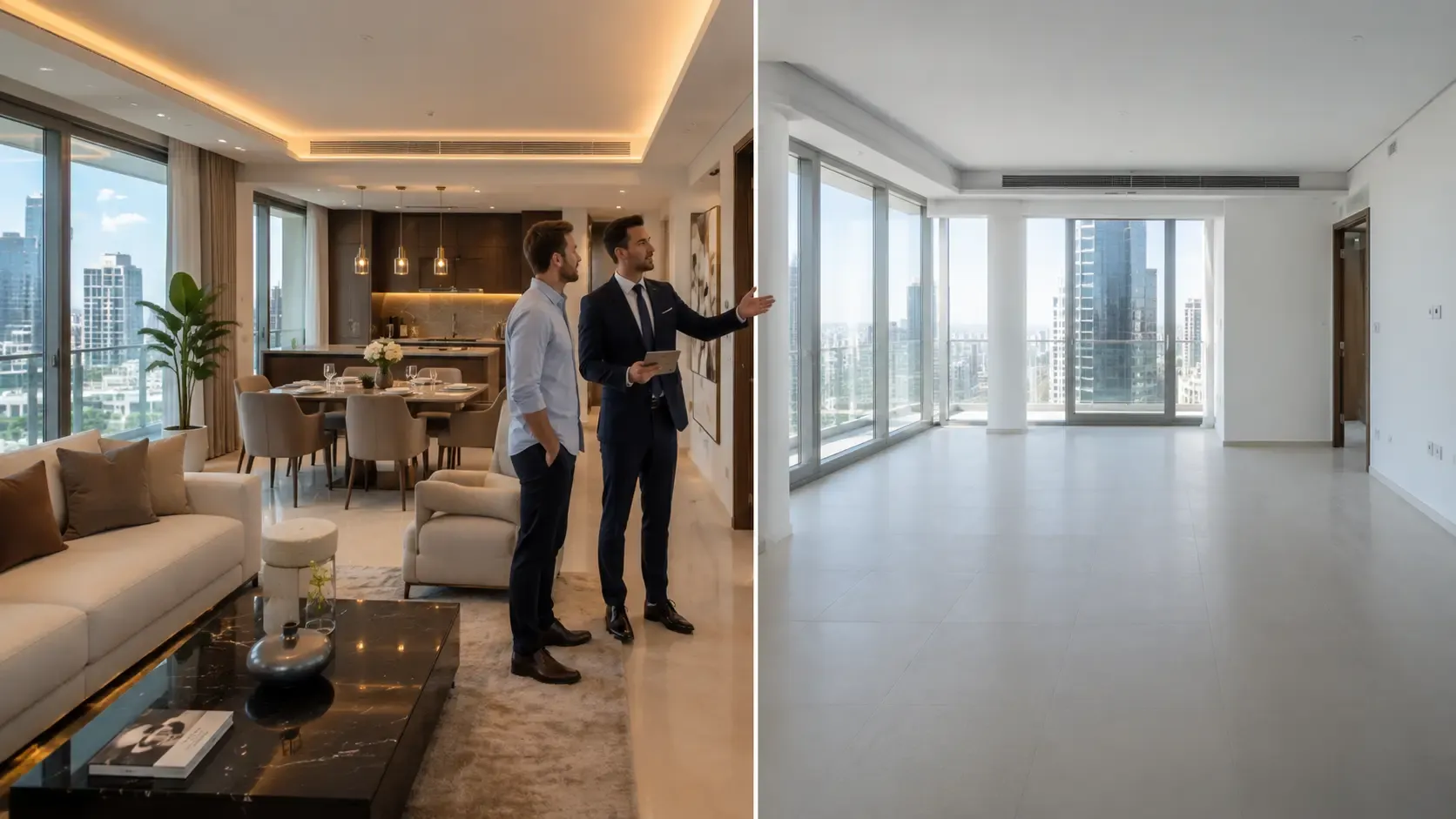
When buying property in Dubai, one of the first decisions you'll face is whether to choose a furnished or unfurnished home. While both options provide the same ownership rights, they differ significantly in terms of purchase cost, move-in readiness, maintenance, and long-term value.
A furnished property offers the convenience of a home that is ready for immediate occupancy, often including furniture, kitchen appliances, and essential fixtures. An unfurnished property, by contrast, provides an empty living space that allows buyers to personalise the interior according to their own preferences.
The right choice depends on your budget, lifestyle, and intended use of the property. Homebuyers may prioritise flexibility and personalisation, while investors often evaluate tenant demand, maintenance requirements, and long-term ownership costs.
This guide compares furnished and unfurnished properties across the factors that matter most, helping you determine which option best suits your needs.
Quick Answer
Choose a furnished property if you want a move-in-ready home with minimal setup and are comfortable paying a higher upfront price for added convenience.
Choose an unfurnished property if you prefer to customise your living space, manage your own furnishings, and potentially reduce the initial purchase cost.
The better choice depends on your budget, lifestyle, and long-term property goals.
Key Takeaways
- Furnished properties include furniture and essential household items.
- Unfurnished properties provide an empty interior ready for personal customisation.
- Furnished homes generally cost more upfront.
- Unfurnished properties offer greater design flexibility.
- The property's location, quality, and management are usually more important than whether it is furnished.
What Is a Furnished Property?
A furnished property is sold with furniture and, depending on the agreement, may also include household appliances, décor, and essential fixtures that allow buyers to move in with minimal preparation.
The exact inventory varies between properties but commonly includes:
- Living room furniture
- Beds and mattresses
- Dining table and chairs
- Kitchen appliances
- Wardrobes
- Curtains or blinds
- Lighting fixtures
Some premium properties may also include televisions, kitchenware, decorative accessories, or smart home features.
Before purchasing, buyers should review the inventory list carefully to understand exactly what is included in the sale.
What Is an Unfurnished Property?
An unfurnished property is sold without movable furniture, allowing buyers to furnish and decorate the home themselves.
Although described as "unfurnished," these properties usually include permanent fixtures such as:
- Built-in wardrobes
- Kitchen cabinets
- Bathroom fittings
- Air conditioning systems
- Fixed lighting
- Built-in appliances where provided by the developer
The absence of movable furniture gives buyers complete freedom to design the interior according to their own style and budget.
Furnished vs Unfurnished Property: Key Differences
Feature | Furnished Property | Unfurnished Property |
|---|---|---|
Move-In Readiness | Immediate | Requires furnishing |
Purchase Price | Generally higher | Generally lower |
Interior Flexibility | Limited | High |
Initial Setup | Minimal | Higher effort |
Furniture Maintenance | Buyer assumes responsibility after purchase | Buyer selects and maintains own furniture |
Purchase Price
One of the most noticeable differences between furnished and unfurnished properties is the purchase price.
Furnished homes are typically priced higher because the sale includes furniture, appliances, and other household items. The premium varies depending on the quality, condition, and brand of the furnishings.
Unfurnished properties generally have a lower purchase price, making them attractive to buyers who already own furniture or prefer to furnish the property gradually.
When comparing prices, buyers should consider the value of the included furnishings rather than focusing solely on the asking price.
Initial Costs
Although furnished properties usually require a higher upfront investment, they often reduce the amount buyers need to spend immediately after completion.
A furnished property may allow you to move in without purchasing major household items.
An unfurnished property typically requires additional spending on:
- Furniture
- Appliances (where not included)
- Soft furnishings
- Home décor
- Storage solutions
The total cost of ownership should include both the purchase price and the expense of preparing the property for occupancy.
Flexibility
Flexibility is one of the main reasons many buyers choose an unfurnished property.
Because the home is effectively a blank canvas, owners have complete control over:
- Interior design
- Furniture selection
- Colour schemes
- Space planning
- Future upgrades
Furnished properties provide convenience but may not reflect the buyer's personal taste. Replacing existing furniture can also reduce the financial benefit of purchasing a furnished home in the first place.
Maintenance Responsibilities
After purchasing a property, responsibility for maintaining its contents generally transfers to the new owner.
With a furnished property, this means maintaining:
- Furniture
- Appliances
- Upholstery
- Decorative items included in the sale
Over time, these items may require repair or replacement, adding to ongoing ownership costs.
With an unfurnished property, buyers decide what furniture to purchase and when to replace it, giving them greater control over maintenance expenses.
Is Convenience Worth Paying More For?
Many buyers assume that a furnished property is automatically the better option because it is ready to move into.
In reality, convenience should be weighed against long-term value.
If the included furniture matches your needs and is of good quality, a furnished property can save both time and effort. However, if you intend to replace most of the furnishings after purchase, paying a premium may offer limited value.
Choosing the option that aligns with your lifestyle and financial priorities is generally more important than selecting a property based solely on its furnishings.
Lifestyle Comparison
The choice between a furnished and an unfurnished property has a noticeable impact on everyday living.
A furnished property offers immediate convenience. Buyers can move in soon after completion without the time and effort involved in selecting furniture, arranging deliveries, or coordinating interior design.
An unfurnished property provides greater freedom. Owners can create a home that reflects their personal style, choose furniture that suits their needs, and upgrade the interior over time.
Neither option is universally better. The right choice depends on whether you prioritise convenience or customisation.
Investment Potential
From an investment perspective, both furnished and unfurnished properties can perform well when matched to the right market.
A furnished property may appeal to investors targeting tenants who value move-in-ready accommodation, particularly professionals relocating to Dubai or individuals seeking convenience.
An unfurnished property offers greater flexibility. Investors can adapt the property to changing market preferences without being committed to existing furniture or interior styles.
When evaluating investment potential, buyers should consider:
- Community demand.
- Property type.
- Building quality.
- Developer reputation.
- Long-term market conditions.
- Total ownership costs.
The property's location and overall quality generally have a greater influence on long-term performance than whether it is furnished.
Rental Demand
Tenant preferences vary depending on their circumstances.
Furnished properties often attract:
- Professionals relocating to Dubai.
- Corporate tenants.
- Individuals seeking short-term convenience.
- Tenants who do not already own furniture.
Unfurnished properties are commonly preferred by:
- Families.
- Long-term residents.
- Tenants with their own furniture.
- Residents planning to stay for several years.
Rather than assuming one option always attracts more tenants, landlords should consider the typical demand within their chosen community.
Long-Term Ownership
Long-term ownership costs differ between furnished and unfurnished properties.
With a furnished property, owners may eventually need to repair or replace:
- Sofas.
- Beds.
- Dining furniture.
- Mattresses.
- Appliances.
- Curtains and soft furnishings.
These ongoing expenses should be factored into the overall cost of ownership.
With an unfurnished property, buyers control when and how they furnish the home, allowing them to upgrade gradually according to their budget and preferences.
Who Should Buy a Furnished Property?
A furnished property may be the better choice if you:
- Want a move-in-ready home.
- Are relocating from another country.
- Prefer minimal setup.
- Value convenience over interior customisation.
- Intend to occupy the property immediately.
It is also suitable for buyers who appreciate professionally designed interiors and do not wish to manage furnishing separately.
Who Should Buy an Unfurnished Property?
An unfurnished property may be more suitable if you:
- Want complete control over interior design.
- Already own furniture.
- Plan to live in the property for many years.
- Prefer to furnish the home gradually.
- Want greater flexibility over long-term ownership costs.
Many owner-occupiers choose unfurnished properties because they allow the home to evolve with changing lifestyle needs.
Common Mistakes Buyers Make
Choosing between a furnished and an unfurnished property involves more than comparing convenience.
Assuming Furnished Means Better Value
A furnished property is only worthwhile if the included furniture is in good condition and suits your needs. Paying extra for furniture you intend to replace rarely represents good value.
Ignoring Furniture Quality
Not all furnished properties include premium furniture. Before purchasing, inspect the condition, quality, and age of the included items.
Focusing Only on the Purchase Price
An unfurnished property may appear less expensive initially, but buyers should also budget for furnishing costs, delivery, and installation.
Similarly, furnished properties may involve future replacement costs that are easy to overlook during the buying process.
Overlooking the Community
Whether a property is furnished or unfurnished is only one part of the decision.
The community, developer, building management, maintenance standards, and location generally have a greater impact on long-term value and day-to-day living.
Final Verdict
Choosing between a furnished and an unfurnished property depends on your priorities as a buyer or investor.
A furnished property offers convenience, allowing you to move in with minimal preparation. It can be an excellent choice for buyers relocating to Dubai or anyone who values a ready-to-live-in home.
An unfurnished property provides greater flexibility, allowing owners to design the interior according to their own preferences while maintaining more control over long-term furnishing decisions.
Neither option is inherently better. The best choice depends on your lifestyle, budget, intended use of the property, and the quality of the home itself.
If you're planning to buy, invest in, sell, or list property in Dubai, Buy Home Dubai can help you compare properties, evaluate communities, and choose the option that best matches your goals.
Frequently Asked Questions
Is it better to buy a furnished or unfurnished property in Dubai?
It depends on your priorities. Furnished properties offer immediate convenience, while unfurnished properties provide greater flexibility for personalising the interior.
Are furnished properties more expensive?
Generally, yes. Furnished properties usually have higher purchase prices because furniture, appliances, and other household items are included in the sale.
What is usually included in a furnished property?
The contents vary by property, but furnished homes commonly include living room furniture, beds, wardrobes, dining furniture, kitchen appliances, and lighting. Buyers should always review the inventory list before purchasing.
Do unfurnished properties include built-in wardrobes and kitchen cabinets?
In most cases, yes. Although described as unfurnished, these properties typically include permanent fixtures such as kitchen cabinets, bathroom fittings, built-in wardrobes, and air conditioning systems.
Which option is better for long-term living?
Many owner-occupiers prefer unfurnished properties because they can customise the interior and replace furnishings according to their own preferences over time.
Is a furnished property better for investment?
Neither option is universally better. Furnished properties may appeal to tenants seeking convenience, while unfurnished properties often attract long-term residents. The better investment depends on the property's location, target tenant profile, and overall market demand.
Should I inspect the furniture before buying?
Yes. If you're purchasing a furnished property, inspect the quality, condition, and included inventory carefully to ensure the furnishings justify any additional purchase price.

Dubai Real Estate
Ready to find your
dream home in Dubai?
Browse thousands of properties across Dubai's most sought-after neighbourhoods. Our experts are ready to guide you.