Real EstateSeptember 9, 2026
Future Mega Projects That Could Impact Dubai Property Prices
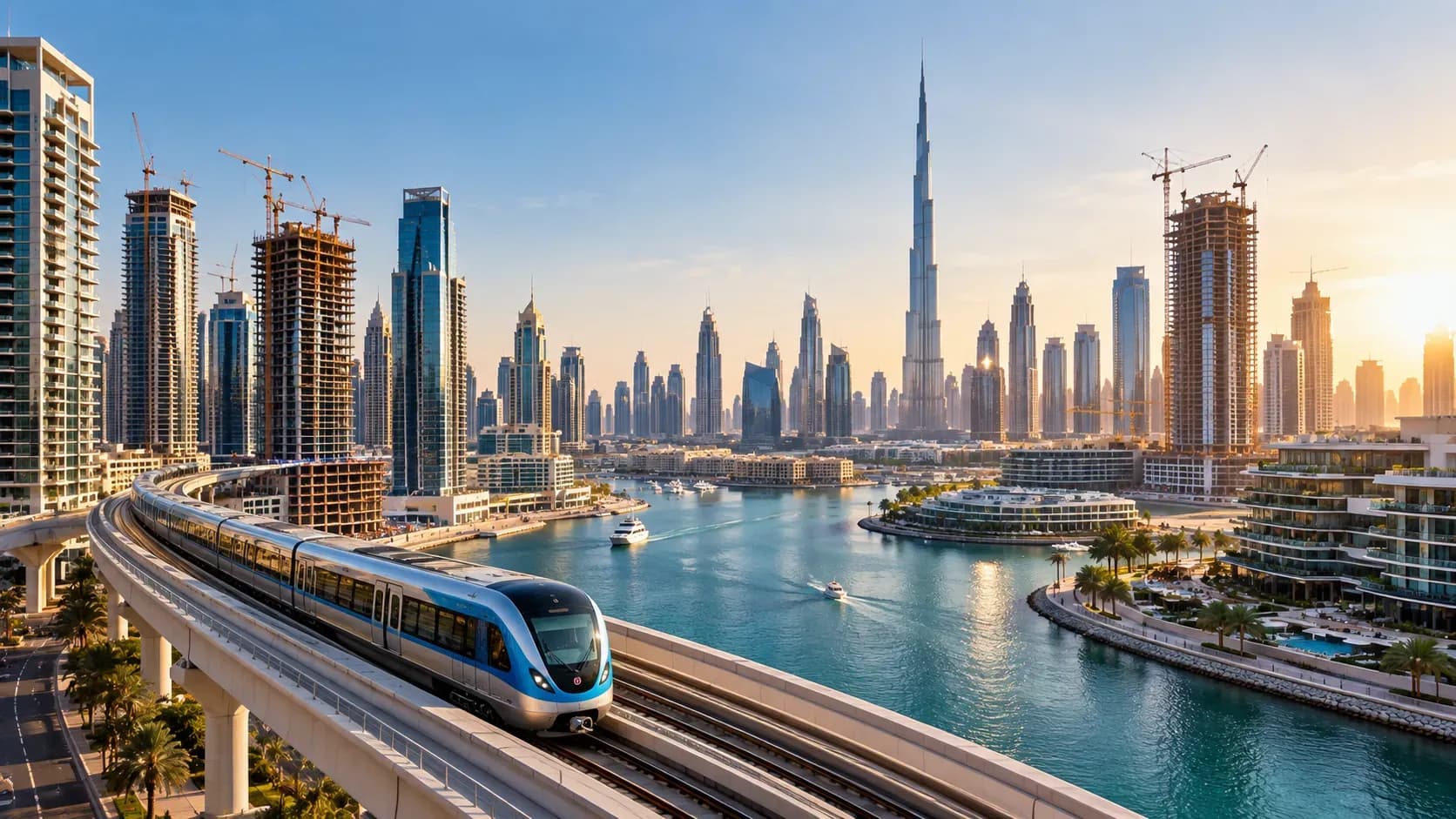
Dubai's property market has always been closely connected to infrastructure, tourism, business expansion and large-scale urban development. As the emirate continues to expand, several major projects could influence where people choose to live, where businesses establish themselves and which communities attract future property demand.
From the Dubai Metro Blue Line and Al Maktoum International Airport expansion to Palm Jebel Ali, Dubai Islands and Expo City Dubai, these projects are expected to reshape different parts of the city over the coming years.
However, a major project announcement does not automatically mean nearby property prices will increase. The actual impact depends on factors such as connectivity, completion timelines, new housing supply, employment growth, rental demand and whether current property prices already reflect future expectations.
For buyers and investors, the more useful question is therefore not simply which mega projects are coming to Dubai, but how each project could change the property fundamentals of the areas around it.
Quick Answer
Future mega projects could affect Dubai property prices by improving connectivity, creating new employment and tourism hubs, increasing demand for housing and transforming previously less-established areas.
Some of the major developments worth watching include:
- Dubai Metro Blue Line
- Al Maktoum International Airport expansion
- Palm Jebel Ali
- Dubai Islands
- Expo City Dubai
- Dubai Creek Harbour and its surrounding development
The potential impact will vary by location. Projects that improve accessibility or create major employment and lifestyle destinations could strengthen demand, while large volumes of new housing could also increase competition between properties.
How Can Mega Projects Affect Dubai Property Prices?
Large infrastructure projects can influence real estate through several channels.
Better Connectivity
Transport infrastructure can make previously less-connected communities easier to reach.
A new metro station, road connection or airport link can reduce commuting times and improve access to employment, education, retail and leisure facilities.
This can make nearby properties more attractive to both residents and investors.
New Employment Hubs
Large airports, business districts, logistics centres and mixed-use developments can create new employment opportunities.
When employment grows in an area, housing demand can follow as workers look for homes nearby.
This can support both rental demand and buyer interest.
Tourism and Lifestyle Demand
Waterfront destinations, hotels, entertainment districts and leisure developments can attract visitors and residents.
A successful destination can therefore create demand for different property types, including permanent residences, investment properties and holiday-oriented accommodation.
New Residential Supply
Mega projects do not only create demand. They can also introduce substantial amounts of new housing.
This is an important consideration for investors.
If a new district adds thousands of apartments, villas or townhouses, investors may face greater competition for tenants and future buyers.
Therefore, future supply should always be evaluated alongside future demand.
Future Mega Projects That Could Impact Dubai Property Prices
Dubai Metro Blue Line
The Dubai Metro Blue Line is one of the most important infrastructure projects for investors watching Dubai's emerging communities.
The planned 30-kilometre route will have 14 stations and connect areas including Dubai Creek Harbour, Ras Al Khor, International City, Dubai Silicon Oasis, Academic City, Mirdif, Al Warqa and Dubai Festival City. The project will also connect with the existing Red and Green Metro lines.
The RTA currently targets an opening date of September 2029. The line is expected to serve areas with a projected population of around one million people and support Dubai's 20-minute city objectives.
For property buyers, the significance is straightforward: better public transport can make residential areas more accessible without requiring residents to rely entirely on private vehicles.
Potential areas to watch include Dubai Silicon Oasis, International City, Ras Al Khor and Dubai Creek Harbour.
However, investors should avoid assuming that every property within a particular distance of a future station will experience identical price growth. Exact station location, walking distance, surrounding development and existing property supply all matter.
Al Maktoum International Airport Expansion
The expansion of Al Maktoum International Airport is potentially one of the biggest long-term catalysts for Dubai's southern growth corridor.
The airport's expansion has an approved investment of AED 128 billion. Dubai Airports says the development is planned to reach a capacity of 150 million passengers annually within the next decade, with an ultimate capacity of 260 million passengers and 12 million tonnes of cargo.
In June 2026, the Dubai Government confirmed that the first phase remained on track to begin operations in 2032.
The property implications extend beyond the airport itself.
A major international aviation hub can support:
- Employment growth
- Logistics and aviation businesses
- Hospitality
- Retail
- Commercial development
- Transport infrastructure
- Residential demand
This makes Dubai South an important area for long-term property investors to monitor.
Dubai South already appeared among the affordable apartment communities tracked by Bayut in H1 2026, with an average transaction value of about AED 842,220 and a projected ROI of 7.24% in its report. These are market-report figures and should not be treated as guaranteed future returns.
The key question for investors is whether the airport expansion translates into sustained employment and population growth across the surrounding region.
Palm Jebel Ali
Palm Jebel Ali represents a major expansion of Dubai's waterfront residential market.
The development is being delivered as a large-scale destination combining residential properties, hospitality, leisure and community infrastructure.
Construction is now well beyond the planning stage. Nakheel awarded contracts worth more than AED 3.5 billion for 544 villas in 2026, with completion targeted for Q4 2028.
The project is also moving into phased delivery, with the first villa handovers scheduled to begin in late 2026.
Palm Jebel Ali could influence property demand in the wider southern coastal area by creating a new premium waterfront destination.
Potential effects could include:
- Greater demand for luxury waterfront homes
- New hospitality activity
- Increased leisure and tourism demand
- Improved infrastructure
- Greater visibility for Jebel Ali and surrounding areas
The development may also create new competition for established waterfront locations.
For buyers, this makes comparison particularly important. A premium price should be supported by actual waterfront access, community infrastructure, amenities, connectivity and long-term demand rather than the project name alone.
Dubai Islands
Dubai Islands is another major waterfront development that could reshape the northern coastal property market.
The masterplan spans five interconnected islands covering approximately 18.6 square kilometres and is planned to include residential, hospitality, retail and leisure uses.
In April 2026, Nakheel awarded an AED 527 million infrastructure contract for Island B covering roads, utilities, drainage, telecommunications and other essential infrastructure.
The development is expected to introduce significant new residential supply while also creating new tourism and leisure destinations.
Dubai Islands could therefore influence property demand in areas such as Deira and the wider northern coastal corridor.
For investors, the opportunity lies in the combination of waterfront positioning, infrastructure and destination development.
The risk is that large amounts of new supply could create competition between properties.
Investors should therefore compare expected rental demand with the number of new units scheduled for delivery.
Expo City Dubai
Expo City Dubai is evolving from the legacy of Expo 2020 into a broader mixed-use urban destination.
Its masterplan incorporates residential, commercial, business, educational, cultural and lifestyle components, with sustainability and healthy living forming important elements of the development concept.
The property significance comes from the potential combination of:
- Residential demand
- Business activity
- Employment
- Retail
- Events
- Connectivity
- Community facilities
This could support demand for nearby residential communities as Expo City develops further.
It is also strategically positioned within Dubai's southern growth corridor, making its relationship with Dubai South, Al Maktoum International Airport and surrounding infrastructure particularly relevant.
For investors, the important factor is whether the district develops into a consistently active employment and lifestyle destination rather than relying primarily on event-driven activity.
Dubai Creek Harbour and Its Wider Development
Dubai Creek Harbour is another major waterfront community whose future property prospects are closely connected to infrastructure.
The area already offers residential, retail and leisure development, but the planned Dubai Metro Blue Line could significantly strengthen its public transport connectivity.
The RTA specifically identifies Dubai Creek Harbour as a key station location on the Blue Line.
Improved metro connectivity could make the area more accessible to residents who work elsewhere in Dubai while also supporting the community's long-term positioning as a waterfront urban district.
This is an example of how two major projects can reinforce each other.
The value proposition is not only the residential development itself but also the infrastructure that connects it to the rest of Dubai.
Which Dubai Areas Could Benefit Most From Future Mega Projects?
Project | Potential Property Impact | Areas to Watch |
|---|---|---|
Dubai Metro Blue Line | Better public transport and accessibility | Dubai Silicon Oasis, International City, Ras Al Khor, Dubai Creek Harbour |
Al Maktoum International Airport | Employment, logistics and infrastructure growth | Dubai South and southern Dubai |
Palm Jebel Ali | Waterfront, tourism and luxury residential demand | Jebel Ali and southern coastal Dubai |
Dubai Islands | Waterfront, hospitality and leisure demand | Dubai Islands, Deira and northern Dubai |
Expo City Dubai | Business, employment and mixed-use demand | Expo City, Dubai South and nearby communities |
Dubai Creek Harbour | Waterfront demand and improved connectivity | Creek Harbour and surrounding areas |
These areas should be viewed as areas to research, not guaranteed investment winners.
Will Mega Projects Automatically Increase Property Prices?
No.
A major project can create the conditions for stronger property demand, but price appreciation depends on how successfully those conditions translate into actual market activity.
Several factors matter.
Project Delivery
A delayed project may take longer to influence property demand.
Connectivity
A development can be geographically close to a mega project but still poorly connected to it.
New Housing Supply
Large developments can create demand while simultaneously adding thousands of competing properties.
Existing Property Prices
If investors have already priced future growth into today's asking prices, some of the expected upside may already be reflected in the property price.
Community Maturity
Residents typically value functioning schools, shops, roads, healthcare, public transport and leisure facilities.
A masterplan alone does not provide these benefits.
Infrastructure vs Property Supply: What Buyers Should Watch
One of the most important concepts for investors is the relationship between new demand and new supply.
Suppose a new infrastructure project attracts businesses and 100,000 additional residents over time. That could create substantial housing demand.
But if developers simultaneously deliver a much larger number of homes than the market can absorb, rental growth and resale competition could remain limited.
This is why investors should ask:
How many people could the project attract, and how many homes will be available for them?
Bayut's H1 2026 report illustrates why community-level analysis matters. While Dubai's residential market remained resilient, price and demand patterns differed considerably between areas and property segments.
The report showed Dubai South apartments with a 7.24% projected ROI, while Dubai Silicon Oasis recorded 8.23%. These figures reflect advertised market analysis rather than guaranteed investment performance.
How Should Investors Evaluate a Property Near a Mega Project?
Before buying because of a future development, consider:
- How close is the property to the actual project?
- Is the infrastructure officially confirmed?
- What is the expected completion timeline?
- Will public transport serve the area?
- How much new housing is planned nearby?
- Is there existing rental demand?
- What are recent transaction prices?
- Are current asking prices already reflecting the future project?
- What are the annual service charges?
- Would you still want the property if the project were delayed?
That last question is particularly useful.
A strong investment should ideally make sense based on current fundamentals, with future infrastructure providing additional potential rather than being the only reason to buy.
Mega Projects vs Established Dubai Communities
There is an important trade-off between emerging and established communities.
Emerging areas can offer greater long-term growth potential because infrastructure and amenities are still developing. However, investors face greater uncertainty around delivery timelines, community maturity and future supply.
Established communities typically have functioning infrastructure, existing rental markets, schools, retail and transport links. Their prices may already reflect some of their advantages, potentially limiting future upside compared with earlier-stage developments.
Neither approach is automatically better.
The right choice depends on your investment horizon, risk tolerance, budget and whether you are buying for rental income or capital growth.
Buyers comparing different master-planned areas can also review the Master-Planned Communities in Dubai guide to understand how infrastructure, amenities and long-term planning influence community appeal.
What Could Dubai's Mega Projects Mean for Property Investors?
The biggest potential impact is not necessarily an immediate jump in property prices.
Mega projects can gradually change the fundamentals of an area by creating:
- Better connectivity
- More employment
- Stronger rental demand
- New lifestyle destinations
- Greater tourism activity
- Improved infrastructure
- Higher community visibility
- New buyer profiles
Over time, these factors can support property demand.
But investors should also monitor:
- New housing supply
- Rental competition
- Service charges
- Construction timelines
- Actual transaction prices
- Vacancy rates
- Community facilities
- Resale liquidity
A future project is therefore best viewed as one component of an investment thesis, rather than the entire thesis.
Frequently Asked Questions
Which Dubai mega project could have the biggest impact on property prices?
The answer depends on the location and timeframe. The Al Maktoum International Airport expansion could have significant long-term implications for Dubai South and the wider southern corridor, while the Metro Blue Line could influence several established and emerging communities through improved connectivity.
Will the Dubai Metro Blue Line increase nearby property prices?
Improved metro access can make nearby communities more accessible and potentially strengthen demand. However, the effect will vary by station, walking distance, property quality, existing prices and competing supply.
Is Dubai South likely to benefit from future infrastructure?
Dubai South is positioned to benefit from major long-term infrastructure and economic development, particularly the expansion of Al Maktoum International Airport. Investors should still assess current rental demand, supply and property pricing before buying.
Could Palm Jebel Ali affect nearby property values?
Palm Jebel Ali could strengthen the wider southern waterfront market by creating a major residential, hospitality and leisure destination. The actual effect on nearby properties will depend on infrastructure delivery, accessibility and the success of the completed destination.
Is it better to buy before or after a mega project is completed?
Buying before completion can provide exposure to future development, but it also carries greater uncertainty. Buying after completion provides more information about actual demand, infrastructure and community performance. Neither strategy is universally better.
Are properties near upcoming projects more risky?
They can be. Investors face risks related to delays, changing supply, infrastructure delivery and market expectations. The risk can be reduced by choosing properties that have strong current fundamentals independent of the future project.
Key Takeaways
- Dubai's future mega projects could reshape property demand across several emerging and established areas.
- The Dubai Metro Blue Line could improve connectivity across Dubai Creek Harbour, Ras Al Khor, Dubai Silicon Oasis, International City and other districts.
- Al Maktoum International Airport could become a major long-term catalyst for Dubai South.
- Palm Jebel Ali is moving from planning into active delivery and could strengthen Dubai's southern waterfront market.
- Dubai Islands is creating substantial new waterfront residential and hospitality supply.
- Expo City Dubai is developing into a broader mixed-use urban destination.
- Dubai Creek Harbour could benefit from improved metro connectivity.
- Mega projects can increase both demand and housing supply.
- Announced infrastructure does not guarantee property price appreciation.
- Investors should compare current pricing, rental demand, future supply and transaction data before buying.
Final Thoughts
Dubai's future mega projects could play an important role in shaping the next phase of the emirate's property market.
The strongest opportunities may emerge where infrastructure, employment, residential demand and lifestyle development reinforce each other. A new metro line can improve accessibility. An airport can create jobs and business activity. A waterfront destination can attract residents, tourists and hospitality investment.
But property buyers should avoid treating every major announcement as a guaranteed price-growth opportunity.
The more useful approach is to ask whether the project will create real, sustainable demand and whether the surrounding property market can absorb the new supply.
For investors, the best opportunities may not always be the properties closest to a mega project. Sometimes the strongest position is a nearby established community that gains better connectivity without facing the full burden of construction risk and new housing competition.
If you are researching future growth areas, comparing communities and evaluating properties based on both current fundamentals and long-term infrastructure, Buy Home Dubai can be a useful starting point for your property research.
Ultimately, Dubai's mega projects should be viewed as potential catalysts, not guarantees. Location, price, supply, demand, connectivity and the quality of the underlying property will continue to determine whether an investment performs well.

Dubai Real Estate
Ready to find your
dream home in Dubai?
Browse thousands of properties across Dubai's most sought-after neighbourhoods. Our experts are ready to guide you.