Real EstateSeptember 19, 2026
Is the Dubai Real Estate Market a Bubble?
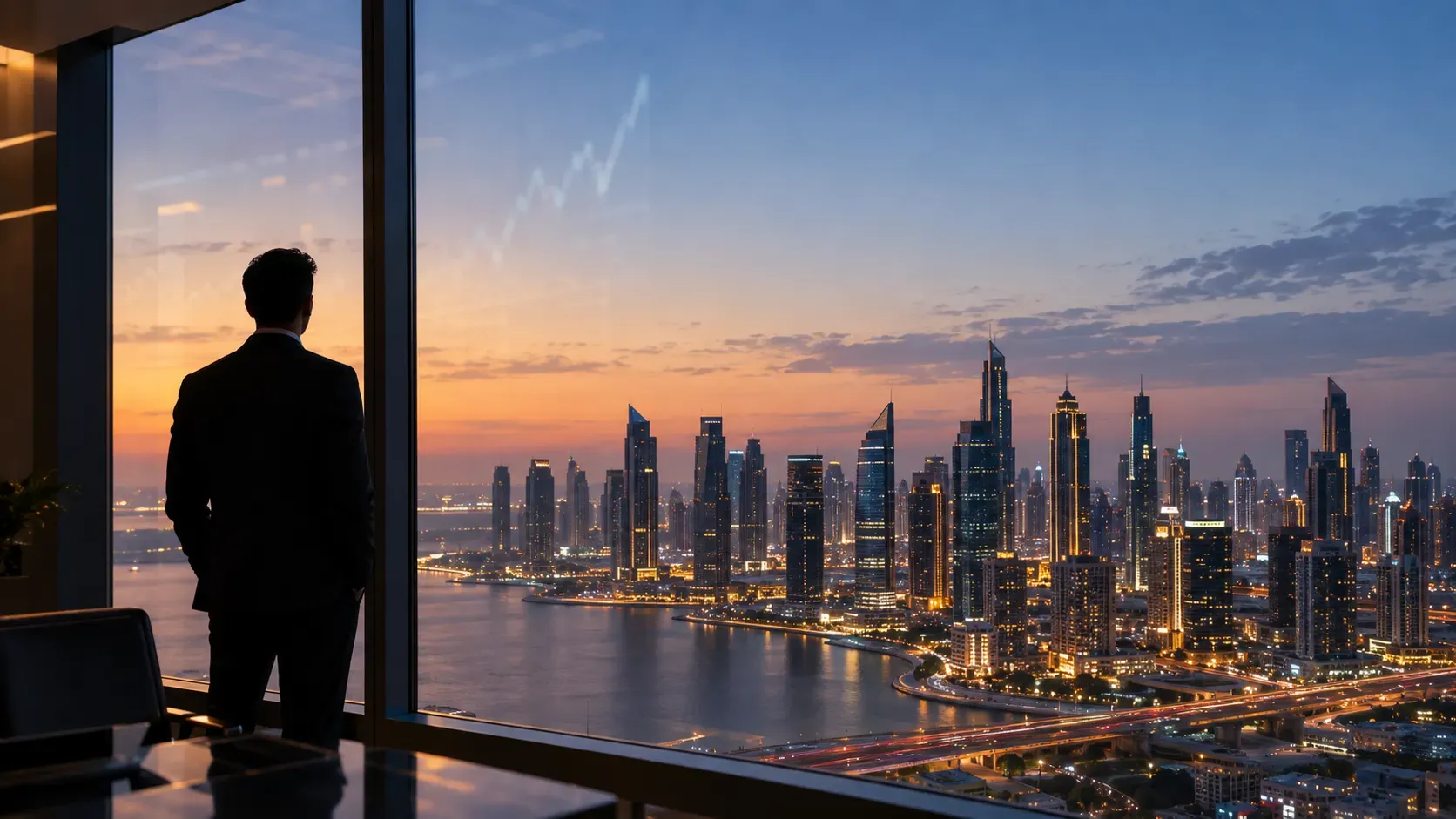
You've probably seen the comparison somewhere: a headline, a YouTube thumbnail, a comment on a property listing, all asking whether Dubai is "just like 2008." If you're about to put real money into this market, that question deserves a real answer, not a reassuring pat on the back or a scary prediction designed to get clicks.
Quick Answer
Dubai's real estate market is not showing the classic signs of a speculative bubble on the verge of collapse, but risk levels aren't zero either. Global bank UBS flagged Dubai's bubble risk as "elevated" for the second year running, yet still ranks it below cities like Miami and Zurich, largely because population growth and regulation, not pure speculation, are driving today's price gains.
Key Takeaways
- Price growth is decelerating, not accelerating: 22% in 2023, 18% in 2024, and 13% in 2025, a cooling trend rather than a blow-off top.
- UBS's Global Real Estate Bubble Index rates Dubai's risk as "elevated" for a second consecutive year, but still lower than several major global cities.
- Dubai's population grew almost 15% since 2020, surpassing 4 million residents in 2025, which is a genuine demand driver, not a speculative one.
- Post-2008 reforms, including the Escrow Law and RERA oversight, are structurally different from the unregulated environment that led to the last crash.
- Oversupply concerns are real but concentrated in specific off-plan segments, not the market as a whole.
What Actually Defines a Property "Bubble"?
A property bubble happens when prices rise mainly because buyers expect them to keep rising, not because of genuine demand from people who need somewhere to live or work.
In a real bubble, prices detach from underlying fundamentals like population growth, rental income, and wages. Buyers flip units before completion purely to profit from the next buyer, not to hold or use the property.
Normal price growth, by contrast, tracks things like job creation, population inflows, and rising rents. That distinction matters more than the price chart alone.
What Happened During Dubai's 2008 Property Crash
Dubai's last major correction wasn't subtle. Prices fell sharply between 2008 and 2010 after years of rapid speculative buying.
A few conditions made that crash especially severe:
- Widespread off-plan flipping, with many buyers reselling contracts before a single brick was laid
- No escrow protections, meaning developer funds weren't ring-fenced against construction progress
- A global financial crisis that hit credit and confidence everywhere at once
- Several high-profile projects stalled or were cancelled outright, leaving buyers exposed
Understanding that history is useful precisely because today's market operates under very different rules.
How Today's Market Is Structurally Different
Today's Dubai market is underpinned by genuine population growth (nearly 4.3 million residents by 2025, up almost 15% since 2020), mandatory escrow protections for developer funds, RERA oversight, and Central Bank mortgage caps, none of which existed in their current form before 2008.
This shift matters because it changes who's actually buying. Dubai's population growth is directly reshaping property prices, and a market absorbing genuine new residents behaves very differently from one propped up purely by speculative resales.
Bubble Warning Signs vs. Where Dubai Stands Today
Rather than debating vibes, it helps to check the market against the actual indicators economists watch for:
Bubble Warning Sign | Where Dubai Stands Today |
|---|---|
Price growth accelerating unsustainably | Decelerating: 22% (2023) to 18% (2024) to 13% (2025) |
Widespread speculative flipping | End-user demand rising, rental registrations up 7% year-on-year |
No safeguards on developer funds | Escrow Law in place since 2007, RERA-monitored |
Unrestricted, high-leverage lending | UAE Central Bank loan-to-value caps in effect |
Supply growing while population stagnates | Population up almost 15% since 2020, past 4 million residents |
As Khaleej Times reported on UBS's Global Real Estate Bubble Index, Dubai's risk score has risen for two straight years, but its overall profile still sits below cities with far weaker demand fundamentals.
Current Supply and Demand Dynamics
Supply is genuinely rising. Dubai's total residential inventory reached roughly 935,000 units by the end of 2025, with around 46,700 new homes delivered that year alone, and tens of thousands more scheduled for handover through 2028.
Demand has kept pace so far. As Khaleej Times noted regarding 2026 oversupply concerns, leading analysts consider widespread oversupply fears overstated, with risk concentrated in specific segments rather than the market broadly.
That said, not every pocket of the market is equally safe:
- Off-plan units sitting unsold within already-launched developments can quietly add to effective supply
- Mid-range and outlying areas are more exposed to a supply-driven slowdown than prime, branded, or waterfront communities
- Construction delays have historically softened the impact of new supply hitting the market all at once
What Could Realistically Cause a Price Correction (Not a Crash)
A correction and a crash are not the same thing, and conflating them leads to bad decisions in either direction.
Analysts at Fitch Ratings have projected a soft correction of roughly 10% to 15% in mid-range segments, driven by rising supply and higher borrowing costs, while prime and branded residences remain more resilient. That's a normal cyclical adjustment, not a market collapse.
If you're weighing how exposed your own investment might be, it's worth reading through the broader risks of investing in Dubai property before deciding which segment fits your risk tolerance.
What This Means If You're Buying in 2026
None of this means timing doesn't matter, it just means the decision is more nuanced than "bubble" or "safe."
- Prime, branded, and waterfront communities have historically shown more resilience during slowdowns
- Off-plan purchases in oversupplied mid-range segments carry more short-term price risk
- Buyers focused on 5 to 10 year holds are far less exposed to short-term corrections than those hoping to flip quickly
For a fuller picture of where things stand right now, it's worth reading our broader look at the Dubai property market heading into 2026 before finalizing any purchase decision.
Frequently Asked Questions
Is Dubai real estate in a bubble right now?
Not in the classic sense. Prices are still rising, but growth is decelerating year over year, and the market is backed by genuine population growth and stricter regulation than existed before the 2008 crash. Risk is elevated, not extreme.
What caused the 2008 Dubai property crash?
Widespread speculative flipping, no escrow protections for developer funds, and the global financial crisis combined to trigger a sharp price collapse and several stalled or cancelled projects.
Is Dubai's property market oversupplied?
Not broadly. Analysts generally view oversupply risk as concentrated in specific off-plan segments and mid-range communities rather than the market as a whole, with population growth still absorbing most new supply.
What would trigger a price correction in Dubai?
A combination of rising new supply, higher borrowing costs, and softening demand in specific segments could bring a moderate correction, particularly in mid-range areas, rather than a market-wide collapse.
Is it risky to buy property in Dubai right now?
Every property market carries some risk, and Dubai's is currently rated "elevated" by international analysts. That said, the structural safeguards in place today, escrow laws, RERA oversight, and mortgage caps, make it a fundamentally different risk profile than the pre-2008 market.
The honest answer to "is this a bubble" is rarely a clean yes or no, and Dubai's market right now sits somewhere in between: genuinely growing, increasingly regulated, but not without pockets of real risk. Knowing where those pockets are, rather than reacting to headlines, is what separates a confident buyer from an anxious one. That's the kind of clarity BuyHomeDubai aims to give buyers trying to make sense of this market.

Dubai Real Estate
Ready to find your
dream home in Dubai?
Browse thousands of properties across Dubai's most sought-after neighbourhoods. Our experts are ready to guide you.