Real EstateJune 27, 2026
What Makes a Good Property Investment in Dubai?
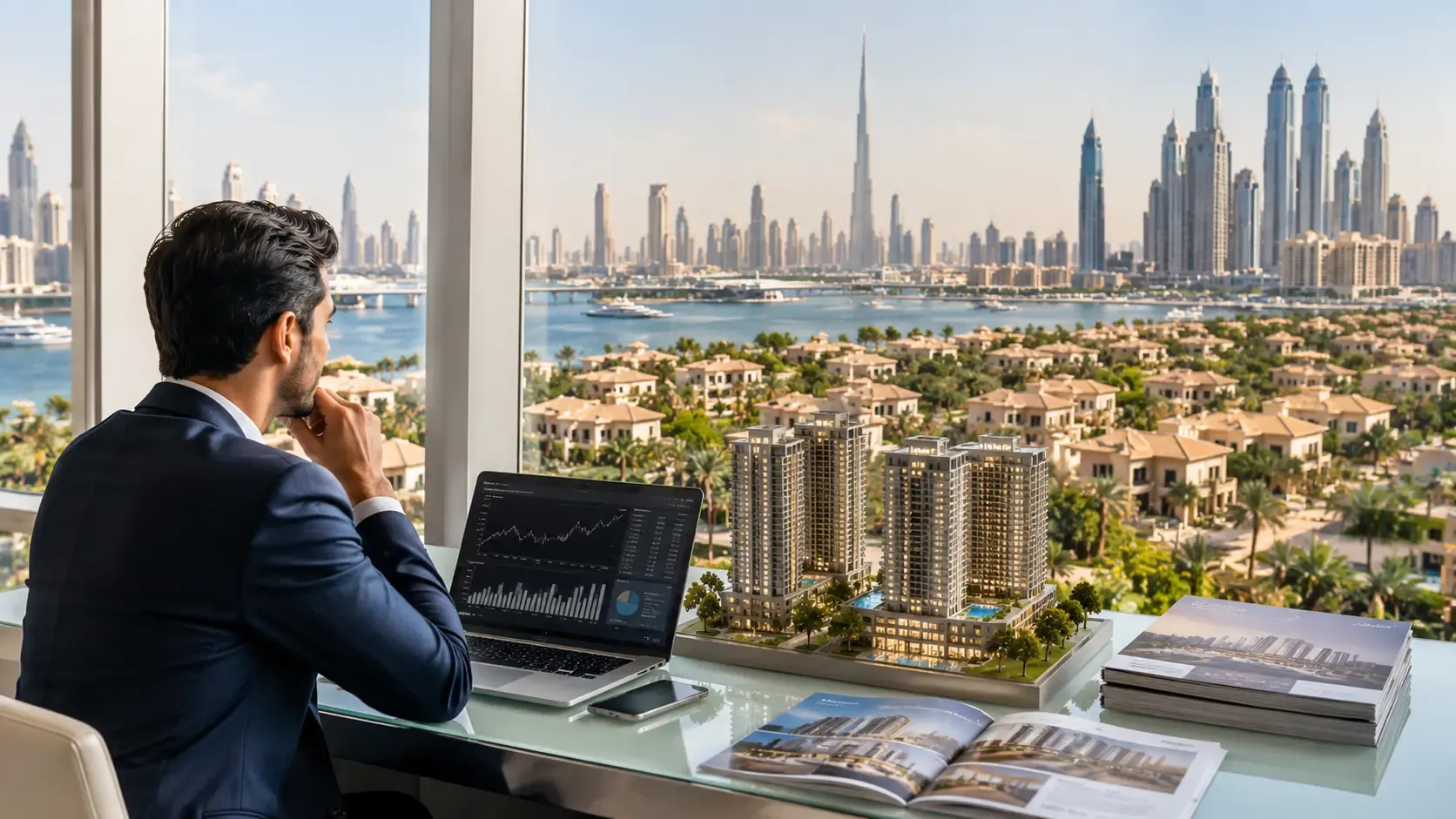
Dubai has become one of the world's most attractive real estate markets, offering investors opportunities to earn rental income, benefit from long-term capital appreciation, and diversify their investment portfolios. But with hundreds of residential communities and thousands of properties available, choosing the right investment isn't always straightforward.
A property that looks impressive or is priced below market value isn't necessarily a good investment. The best-performing properties typically combine strong location, consistent tenant demand, reasonable ownership costs, and long-term growth potential.
Whether you're buying your first investment property or expanding your portfolio, this guide explains what makes a good property investment in Dubai and the factors you should evaluate before making a decision.
Quick Answer
A good property investment in Dubai is one that aligns with your financial goals while offering strong rental demand, potential for capital appreciation, manageable ownership costs, and a desirable location. Successful investors evaluate the property's long-term performance rather than focusing only on the purchase price.
Key Takeaways
- Location remains the single biggest factor influencing investment performance.
- Strong rental demand helps reduce vacancy and generate consistent income.
- Capital appreciation is just as important as rental yield.
- Service charges and ongoing expenses affect your actual returns.
- Community infrastructure and developer reputation matter.
- Off-plan and ready properties each suit different investment strategies.
- Research and patience usually outperform chasing short-term market trends.
Start with Your Investment Goal
Before looking at specific properties, define why you're investing.
Different buyers have different objectives.
For example:
Investment Goal | Property Characteristics |
|---|---|
Rental income | High-demand apartments in established communities |
Long-term capital growth | Emerging master-planned developments |
Holiday rental income | Tourist-friendly locations |
Future family home | Established residential communities |
Portfolio diversification | Mix of apartments, villas, or townhouses |
Knowing your objective makes it easier to narrow your options.
Location Is Still the Most Important Factor
A well-located property often performs better over time than a larger or cheaper property in a less desirable area.
Look for communities with:
- Good transport connections
- Schools and healthcare nearby
- Retail and entertainment options
- Employment hubs
- Ongoing infrastructure investment
- Strong tenant demand
Popular investment locations include:
- Dubai Marina
- Business Bay
- Dubai Hills Estate
- Downtown Dubai
- Jumeirah Village Circle (JVC)
- Dubai Creek Harbour
The "best" area depends on your investment strategy rather than popularity alone.
Evaluate Rental Demand
A property only generates rental income when tenants want to live there.
Communities with healthy rental demand typically benefit from:
- Convenient locations
- Good amenities
- Competitive pricing
- Established infrastructure
- Strong employment access
Researching occupancy trends and tenant profiles can provide useful insight before buying.
Look Beyond Rental Yield
Many first-time investors compare properties based only on advertised rental yields.
While rental yield is important, it doesn't tell the full story.
A better investment analysis considers:
- Purchase price
- Rental income
- Service charges
- Maintenance costs
- Vacancy periods
- Property management fees (if applicable)
- Long-term appreciation potential
A property with slightly lower rental yield may deliver stronger overall returns if ownership costs are lower and values increase steadily.
Consider Capital Appreciation
Rental income provides cash flow, while capital appreciation builds long-term wealth.
Properties with appreciation potential often benefit from:
- Infrastructure improvements
- New transport links
- Growing communities
- Limited future supply
- High-quality developers
- Strong buyer demand
Emerging communities may offer greater growth potential, while mature areas often provide more predictable performance.
Compare Off-Plan and Ready Properties
Both options have advantages.
Off-Plan Property | Ready Property |
|---|---|
Lower entry prices | Immediate ownership |
Flexible payment plans | Immediate rental income |
Potential appreciation during construction | Easier to inspect before buying |
Completion risk | Usually higher upfront investment |
Choose the option that aligns with your investment timeline and risk tolerance.
Pay Attention to Service Charges
Two properties with similar prices can produce very different returns because of annual service charges.
Before buying, ask:
- What are the annual service charges?
- What facilities do they cover?
- Have they increased recently?
Lower ownership costs can significantly improve long-term profitability.
Research the Developer
The developer can influence both property quality and long-term value.
Look for developers with a track record of:
- Delivering projects on time
- Maintaining construction quality
- Building desirable communities
- Providing reliable after-sales support
Buying from an established developer can reduce certain investment risks.
Understand the Target Tenant
Every property appeals to a different audience.
For example:
Tenant Type | Property Preference |
|---|---|
Young professionals | Apartments near business districts |
Families | Villas and townhouses in suburban communities |
Executives | Luxury apartments and penthouses |
Students | Affordable apartments with transport access |
Matching your property to likely tenant demand can improve occupancy.
Consider Future Infrastructure
Infrastructure development often drives property demand.
Projects such as:
- New metro stations
- Schools
- Shopping destinations
- Business districts
- Parks
- Healthcare facilities
can increase the attractiveness of a community over time.
Future growth plans are worth considering alongside current market conditions.
Don't Ignore Liquidity
Liquidity refers to how easily you can sell your property when needed.
Properties in well-established communities with broad buyer appeal often attract more interest than highly specialized or niche developments.
If flexibility is important, consider whether the property is likely to remain attractive to future buyers.
Common Mistakes Investors Make
Even experienced investors can overlook important details.
Some common mistakes include:
- Buying based only on price
- Chasing unusually high advertised yields
- Ignoring service charges
- Overlooking developer reputation
- Failing to research the community
- Expecting guaranteed appreciation
- Making emotional rather than financial decisions
Avoiding these mistakes can improve long-term investment performance.
Investment Checklist
Before buying, ask yourself:
Question | Why It Matters |
|---|---|
Is the location in demand? | Supports rental income and resale value |
Does the property fit my investment goal? | Keeps strategy focused |
Are service charges reasonable? | Affects profitability |
Is the developer reputable? | Reduces project-related risks |
Is there long-term growth potential? | Supports appreciation |
Can I comfortably afford ongoing ownership costs? | Improves financial sustainability |
If you can answer "yes" to most of these questions, the property may be worth further consideration.
Signs of a Strong Investment Property
Good investment properties often share several characteristics:
- Located in established or growing communities
- Consistent rental demand
- Realistic purchase price
- Competitive service charges
- Built by reputable developers
- Strong resale appeal
- Potential for long-term appreciation
No single factor guarantees success, but a combination of these indicators usually points toward a stronger investment opportunity.
Final Thoughts
A good property investment in Dubai isn't simply the cheapest property or the one promising the highest rental yield. The strongest investments combine location, demand, quality, manageable ownership costs, and long-term growth potential.
Taking time to evaluate the bigger picture can help you build a more resilient investment portfolio and make decisions based on data rather than marketing claims.
If you're planning to buy, invest in, sell, or list property in Dubai, Buy Home Dubai can help you compare communities, evaluate opportunities, and identify properties that align with your investment goals.
Frequently Asked Questions
What is considered a good property investment in Dubai?
A good investment typically offers strong rental demand, potential for capital appreciation, reasonable ownership costs, and is located in a desirable community.
Is rental yield the most important factor?
No. Rental yield is important, but investors should also consider capital appreciation, service charges, vacancy risk, and long-term market demand.
Which property type is best for investment?
It depends on your goals. Apartments often appeal to investors seeking rental income, while villas and townhouses may offer stronger long-term appreciation in some communities.
Are off-plan properties good investments?
They can be, especially for investors with a longer time horizon who are comfortable with construction timelines and developer-related risks.
How do service charges affect returns?
Higher service charges reduce net rental income and overall profitability, so they should always be included when evaluating an investment.
Should I focus on established or emerging communities?
Both have advantages. Established communities often provide more predictable rental demand, while emerging areas may offer greater long-term appreciation potential if development continues as expected.

Dubai Real Estate
Ready to find your
dream home in Dubai?
Browse thousands of properties across Dubai's most sought-after neighbourhoods. Our experts are ready to guide you.